UEA 2013 — Questão 9 · Leitura e interpretação de texto
Leitura e interpretação de texto
UEA Macro 2013 · Inglês
Amazon tribes
The Amazon is the world's largest rainforest. It is also the ancestral home of one million Indians. They are divided into about 400 tribes, each with its own language, culture and territory. Many have had contact with outsiders for almost 500 years. Others – 'uncontacted' tribes – have had no contact at all.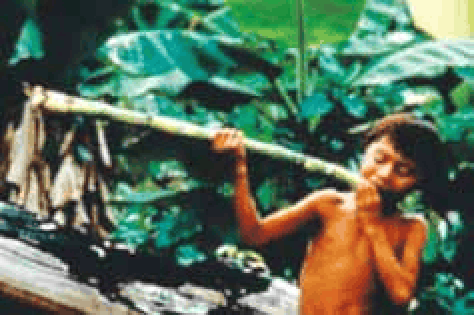 • How do they live?
Most Indians live in settled villages by the rivers, and grow vegetables and fruits like manioc, corn, beans and bananas. They also hunt and fish, using plant-based poisons to stun the fish. Some tribes use shotguns for hunting, others use bows and arrows, spears, or blowguns with darts tipped with curare. Only a few Amazonian tribes are nomadic; they tend to live deep in the forest away from the rivers. They grow some crops but rely more on hunting and gathering.
• _____ their problems?
Almost all the Indians' problems revolve around land: outsiders either want their land, or something on or underneath it. The key threats are a massive boom in oil and gas exploration, rampant illegal logging and the rapid spread of ranching and farming.
(www.survivalinternational.org. Adaptado.)
De acordo com o texto,
The Amazon is the world's largest rainforest. It is also the ancestral home of one million Indians. They are divided into about 400 tribes, each with its own language, culture and territory. Many have had contact with outsiders for almost 500 years. Others – 'uncontacted' tribes – have had no contact at all.
• How do they live?Most Indians live in settled villages by the rivers, and grow vegetables and fruits like manioc, corn, beans and bananas. They also hunt and fish, using plant-based poisons to stun the fish. Some tribes use shotguns for hunting, others use bows and arrows, spears, or blowguns with darts tipped with curare. Only a few Amazonian tribes are nomadic; they tend to live deep in the forest away from the rivers. They grow some crops but rely more on hunting and gathering.
• _____ their problems?
Almost all the Indians' problems revolve around land: outsiders either want their land, or something on or underneath it. The key threats are a massive boom in oil and gas exploration, rampant illegal logging and the rapid spread of ranching and farming.
(www.survivalinternational.org. Adaptado.)
De acordo com o texto,
Alternativas
- Aa maior parte dos indígenas vive em aldeias perto de rios e não são nômades.
- Ba maioria das 400 tribos amazônicas é nômade.
- Ctodos os indígenas já abandonaram o uso de armas de caça tradicionais.
- Das tribos nômades plantam roças de mandioca e milho e quase não caçam mais.
- Eum milhão de indígenas de 400 tribos já foram aculturados pelo homem branco.
Consulte a resposta
Visitantes podem consultar seis questões. Com uma conta gratuita, consulte até 20 por dia; no plano pago, todas sem limite.
Fonte: UEA Macro 2013 · Consultar referência